Magnetic Resonance Imaging (MRI) is a non-invasive and highly effective medical imaging technique used to visualize the internal structures of the body, helping diagnose a wide range of medical conditions. If your healthcare provider has recommended an MRI, it’s natural to have questions about the procedure. In this article, we’ll provide you with a comprehensive guide on what to expect when getting an MRI done.
1. Scheduling and Preparation:
Your healthcare provider will schedule your MRI examination. Before the appointment, inform them about any medical conditions or concerns you may have, as certain factors could affect the procedure. Depending on the type of MRI, you may be instructed to fast for a specific period.
2. Arrival at the Imaging Center:
On the day of your MRI, you’ll need to arrive at the imaging center at the appointed time. Wear comfortable, loose-fitting clothing without metal zippers, buttons, or jewelry, as metallic objects can interfere with the magnetic field. You might be asked to change into a gown provided by the imaging center.
3. Registration and Paperwork:
At the imaging center, you’ll go through a registration process. This involves providing your identification, medical history, and insurance information. You may also need to sign consent forms, which outline the details of the MRI procedure and its associated risks.
4. MRI Screening:
Before entering the MRI room, the technologist will ask you several safety questions to ensure there are no contraindications to the procedure. Inform them if you have any metallic implants or objects in your body, such as pacemakers, aneurysm clips, or metallic fragments. Some of these can be hazardous in the magnetic field.
5. Injection of Contrast Agent (if needed):
In some cases, a contrast agent is used to enhance the visibility of specific tissues or structures during the MRI. This contrast agent is injected intravenously, usually through a vein in your arm, before or during the scan. If a contrast agent is used, the technologist will explain the process to you.
6. The MRI Machine:
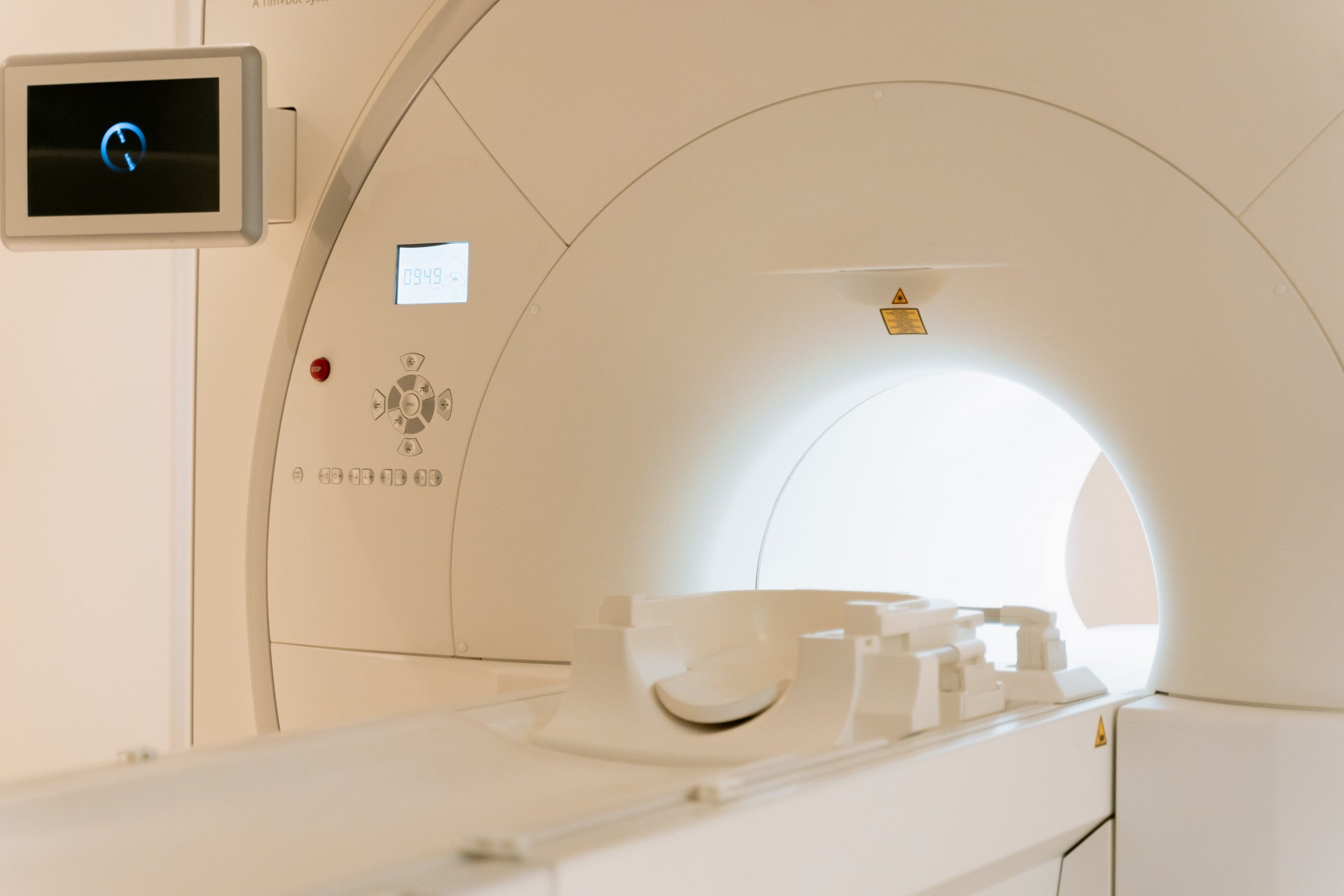
The MRI machine is a large, tube-like device with an open bore in the center. You’ll be asked to lie down on the examination table, which will then slide into the bore. The part of your body being examined will be positioned in the center of the machine.
7. Staying Still:
It’s crucial to remain as still as possible during the MRI. Any movement can lead to blurry images, which may necessitate repeating the scan. The MRI machine will make loud knocking or tapping sounds during the scan. Earplugs or headphones with music are usually provided to help you cope with the noise.
8. Communication:
While you’ll be alone in the MRI room during the scan, the technologist will be in constant communication with you through an intercom. They can see and hear you at all times. If you have any concerns, are uncomfortable, or need assistance, you can speak to them.
9. Duration:
The duration of the MRI scan varies depending on the type of scan and the area of the body being examined. Typically, an MRI lasts anywhere from 15 minutes to an hour. The technologist will inform you of the expected duration before the scan begins.
10. Post-Scan:
After the MRI, you can resume your regular activities immediately. There are typically no side effects or downtime associated with the procedure. If a contrast agent was used, you’ll be encouraged to drink plenty of water to help flush it out of your system.
11. Receiving Results:
The images obtained during the MRI will be interpreted by a radiologist. The results will be shared with your healthcare provider, who will discuss the findings with you and determine the next steps in your treatment or diagnosis.
In conclusion, undergoing an MRI is a common and safe medical procedure that can provide crucial diagnostic information. Understanding the steps and what to expect during the process can help ease any anxiety or concerns you may have. The healthcare providers and technologists involved in your MRI are there to ensure your comfort, safety, and the accuracy of the imaging results, making the experience as smooth and stress-free as possible.